
The cell membrane is the outermost membrane of a cell. It is thin and flexible membrane that surrounds the cell and protect it from external environment. It is also called selectively permeable membrane because it regulate the movement of substance in or out though the cell.
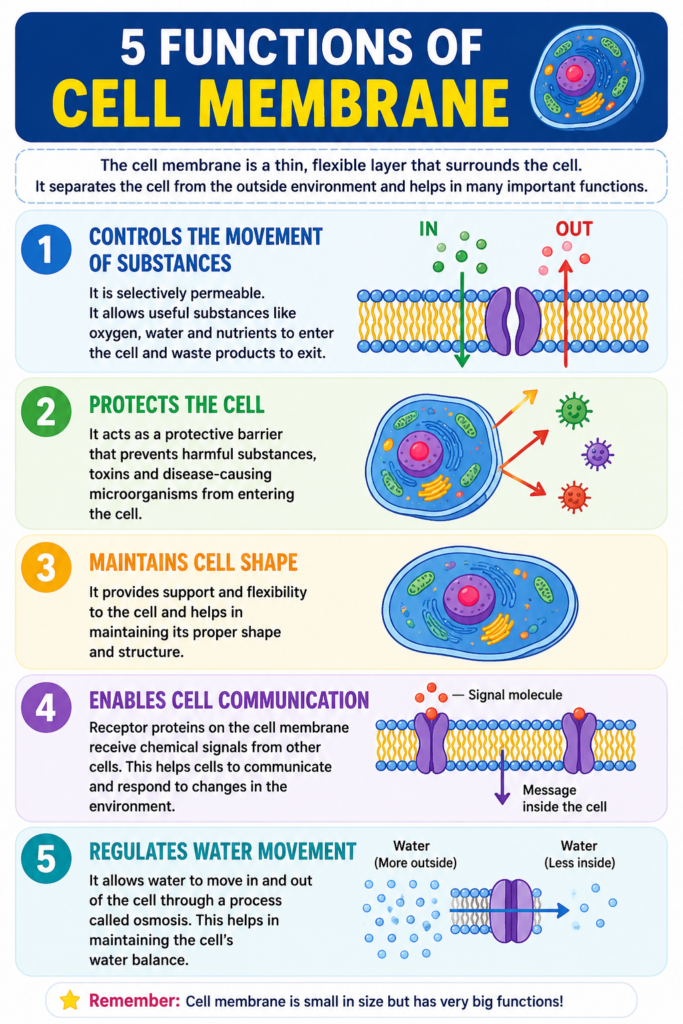
The Important 5 Function of cell membrane
Here The 5 functions of cell membrane are:
1. Controls the movement of substances
It regulate the movement of substance so that useful material like oxygen, water and nutrients enter in to the cell while removing the waste material like co2.
2. Protect the cell
The cell membrane is work like a protective barrier so the harmful substance and microorganism can’t enter in to cell so that our cell is works properly.
3. Give a shape of the cell
Cell membrane also provide support and flexibility making them a shape and structural intergrity.
4. Helps in cell communication
The Receptor protein present in cell membrane helps to receive chemical signal from other cell so that cell can communicate and make a coordination in order to work other cellular activities.
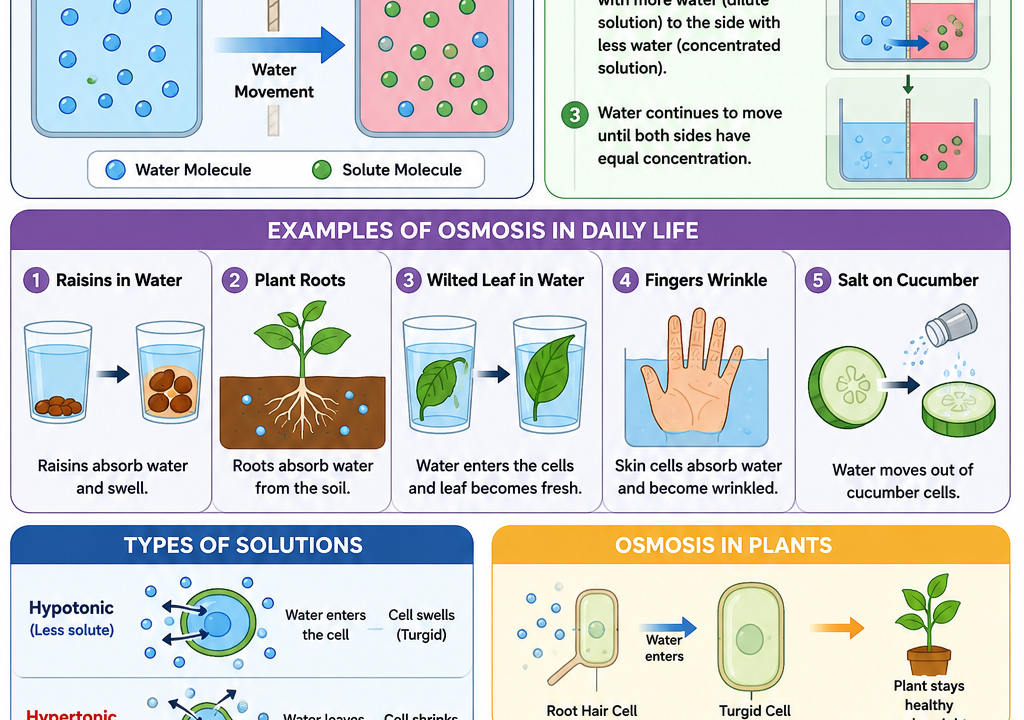
5. Regulates Water Movement
The cell membrane helps in the movement of water across the membrane so that it maintain the inner cell water balance for normal functionality.
Here is the quick guide for fast revision for students for class 9, 10, 11, 12. it Generally ask in CBSE board or a popular topic of Ncert books solution.
| Function | Importance |
|---|---|
| Controls movement of substances | It Regulates the entry of nutrients and removal of waste. |
| Protects the cell | It protect from harmful substances and pathogens. |
| Maintains cell shape | It Provides structural support and flexibility. |
| Enables cell communication | It helps in Receives and transmits chemical signals between cells. |
| Maintains Water Level | It Keeps the cell’s internal environment stable for maintain water. |
Rate this article
Tap a star to rate
Was this helpful?
Sorry to hear that — what can we improve?
✓ Thanks for your feedback!