
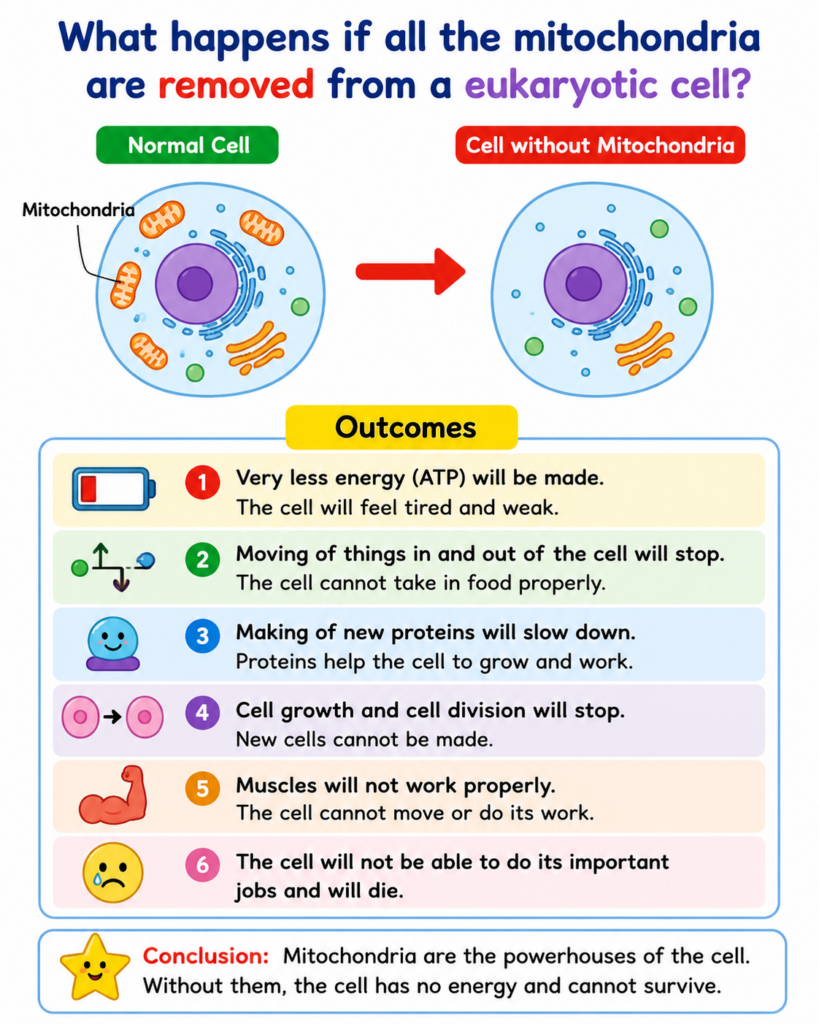
Mitochondria is also knows as “Powerhouses of the cell” because they produce energy in the form of ATP (Adenosine Triphosphate) to perform cellular activities. The cell need energy to perform various activities like respiration, growth, cell division protein synthesis etc. if we remove mitochondria in eukaryotic cell then cell lose it energy and doesn’t perform any function and finally cell die.
What is mitochondria
Mitochondria is a double membrane bound organelle that are mostly found in Eukaryotic cell. It is often called as powerhouse of cell because they supply the energy needed for cellular activities. Each mitochondrion is surrounded by two membrane called outer membrane and inner membrane.
The outer membrane is smooth and porous while inner membrane is folded into finger-like projection called Cristae, which increase the surface area for chemical energy and facilitate energy production.
In mitochondria, The glucose and other molecule are broken down to release energy during a process which is called as cellular respiration. The Energy is then stored in the form of a Molecule called Adenosine Triphosphate (ATP) which acts as a energy currency and later utilize to perform cellular activities.
How do mitochondria produce energy?
Let’s see that how mitochondria produce energy step by step. The energy produce through cellular respiration.
1. Glucose is broken down
The food we eat contain carbohydrates, that firstly digested and convert into glucose. Cell receive Glucose and then Cytoplasm is partially broken down into pyruvate during Glycolysis.
2. Pyruvate enters the mitochondria
After Pyruvates formation, it goes in to inner membrane of mitochondria where it further breakdown.
3. Oxygen is used
Then after oxygen combines with pyruvates product and release energy along with carbon dioxide and water. This process is called aerobic respiration.
4. ATP is produced
The energy released in the form of ADP (Adenosine Diphosphate) that after get finally converted into ATP (Adenosine Triphosphate).
Overall equation:
Glucose + Oxygen → Carbon dioxide + Water + ATP (Energy)
5. ATP powers the cell
The ATP molecules are transported throughout the cell and provide energy for performing various activities such as:
- Cell growth
- Cell division
- Active transport
- Protein synthesis
- Muscle contraction
- Nerve impulse transmission
This Question belong to class 9 chapter name cell the building block of life. Thank to read if don’t mine please rate our answer. i hope you will find helpful.
Rate this article
Tap a star to rate
Was this helpful?
Sorry to hear that — what can we improve?
✓ Thanks for your feedback!